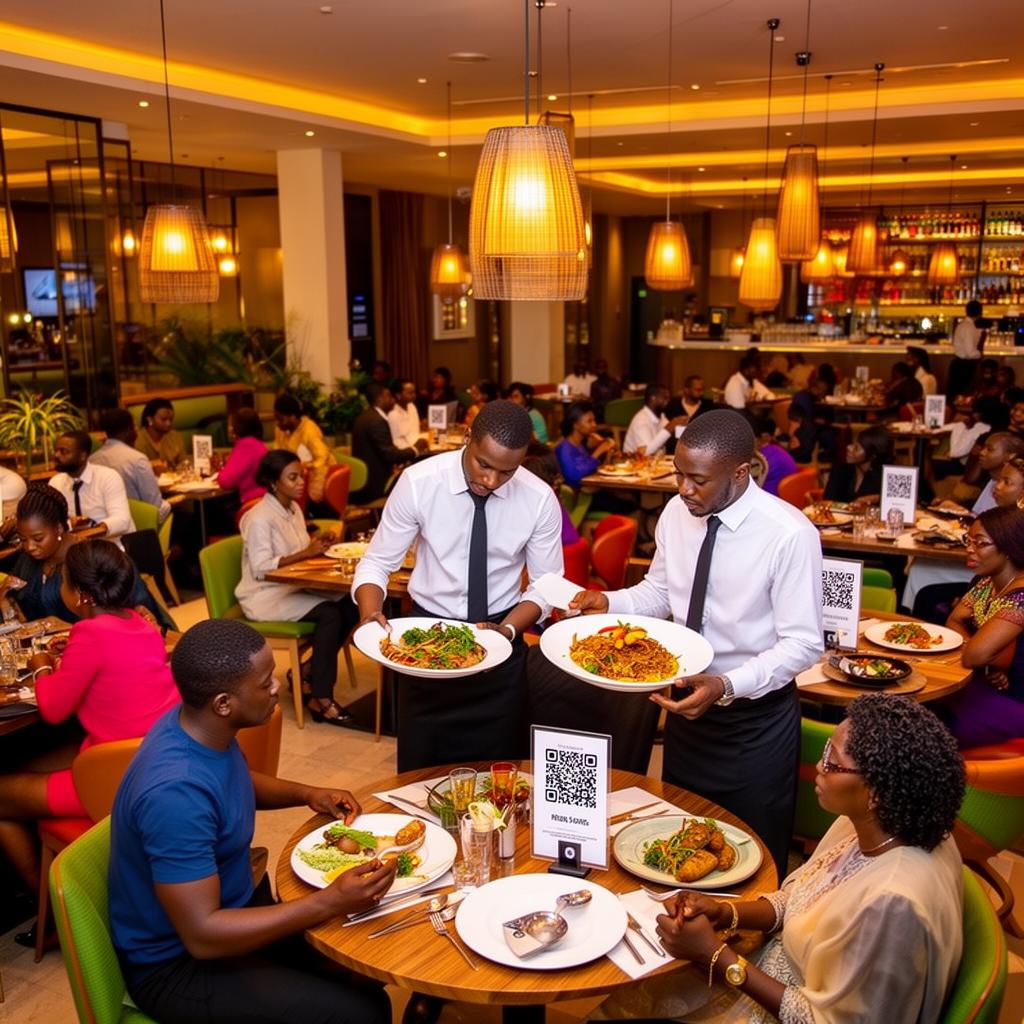
A busy dining room during service

Restaurants & bars

Take the order sooner. Turn the table faster.

A dining room loses money to time, and never gets a bill for it. The wait to be noticed, the wait to pay, and the walk from the table to the pass.

Table four

The guest orders when they have decided, not when you walk past

A code on the table opens your menu in the phone's browser. Nothing to download, nothing to sign up for.

Table 04

Scan with the camera

Your catalogCustomer view
A bowl of pasta with chicken and peppers, garnished with coriander₦4,500

Pasta & chicken

Served with peppers and fried plantain

Quantity

Where the minutes go

Three waits per table, and what each one costs

  • The order comes from where the guest is

    Today
    Guests wait to be noticed
    With Tab
    They order the moment they've decided

    A code on the table, a message on WhatsApp, or your storefront. One menu sits behind all three, and staff can still take an order by hand on their own phone.

  • One queue, the right station

    Today
    Tickets rewritten by hand
    With Tab
    Food to the kitchen, drinks to the bar, automatically

    Every order lands where it is made, with modifiers attached and nothing transcribed twice.

  • The table pays without waiting for you

    Today
    Waiting to catch someone's eye to pay
    With Tab
    They pay from the table when they're ready

    The bill is already on their phone. It settles to your bank as one figure by T+1, and the table releases itself.

  • The bar running dry

    Today
    A guest is the one who finds out
    With Tab
    The bottle comes off the menu at zero

    Drinks are countable, so the floor hears it first. Food works differently, as below.

One order, two stations

Food to the kitchen, drinks to the bar, written out once

A table orders a bottle of red, two starters and a main. Today that becomes a page of handwriting, a walk to the pass, a shout across to the bar, and a fair chance the modifier gets lost somewhere in between.

In Tab the order splits itself by station. The kitchen sees the food with its modifiers attached; the bar sees the drinks. Each ticket carries the table it came from, so the pass never has to ask.

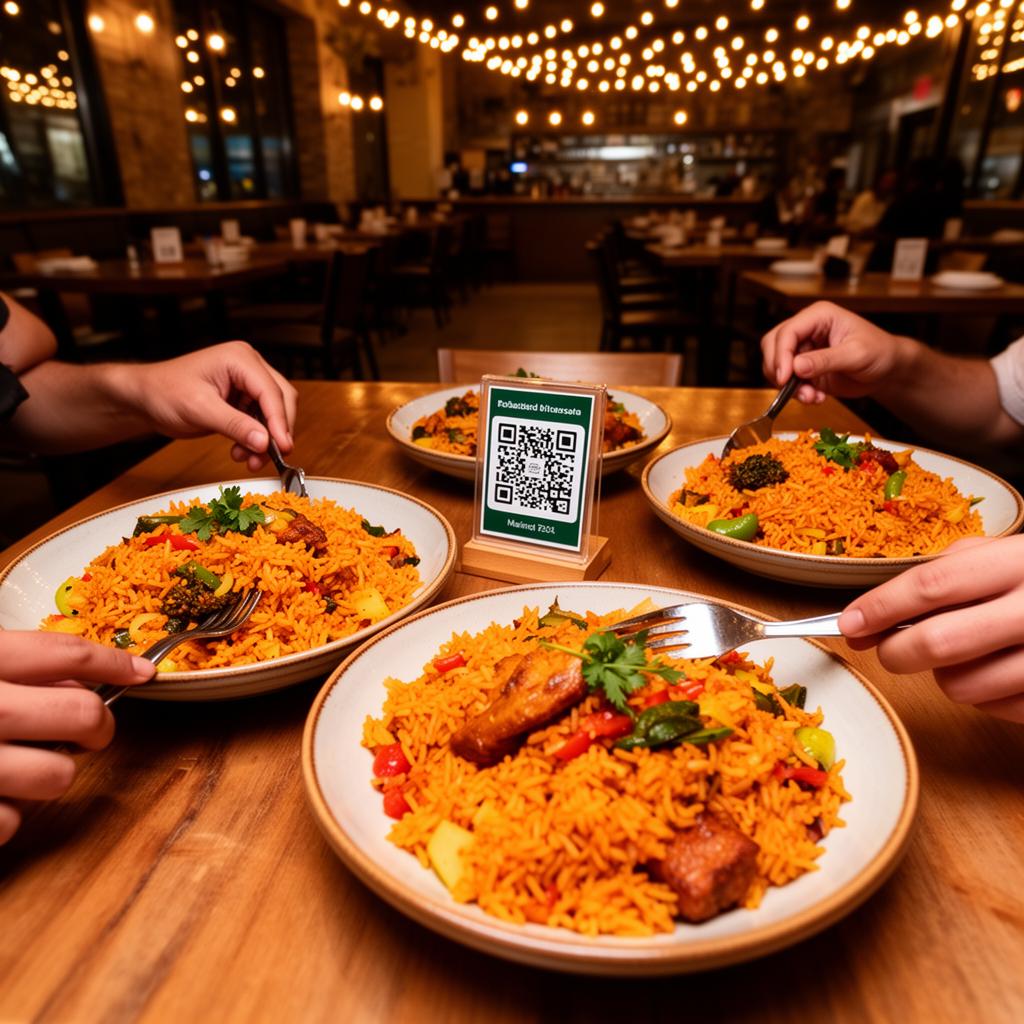
Plates of jollof rice on a table with a QR code standing between them
Kitchen ticket

The Lagos Grill · Table 12

  • 2× Suya PlatterKitchen
  • 2× Jollof & ChickenKitchen
  • 4× ChapmanBar

Closing the table

Getting paid without the second wait

The second wait is the expensive one. A table that has finished eating is a table you cannot sell again, and it sits there while someone tries to catch an eye.

The bill is on their phone already. They pay it in full by card or bank transfer, or on the machine you already own with the payment recorded, and the table releases the moment it clears. A group can split it if they want to; most do not.

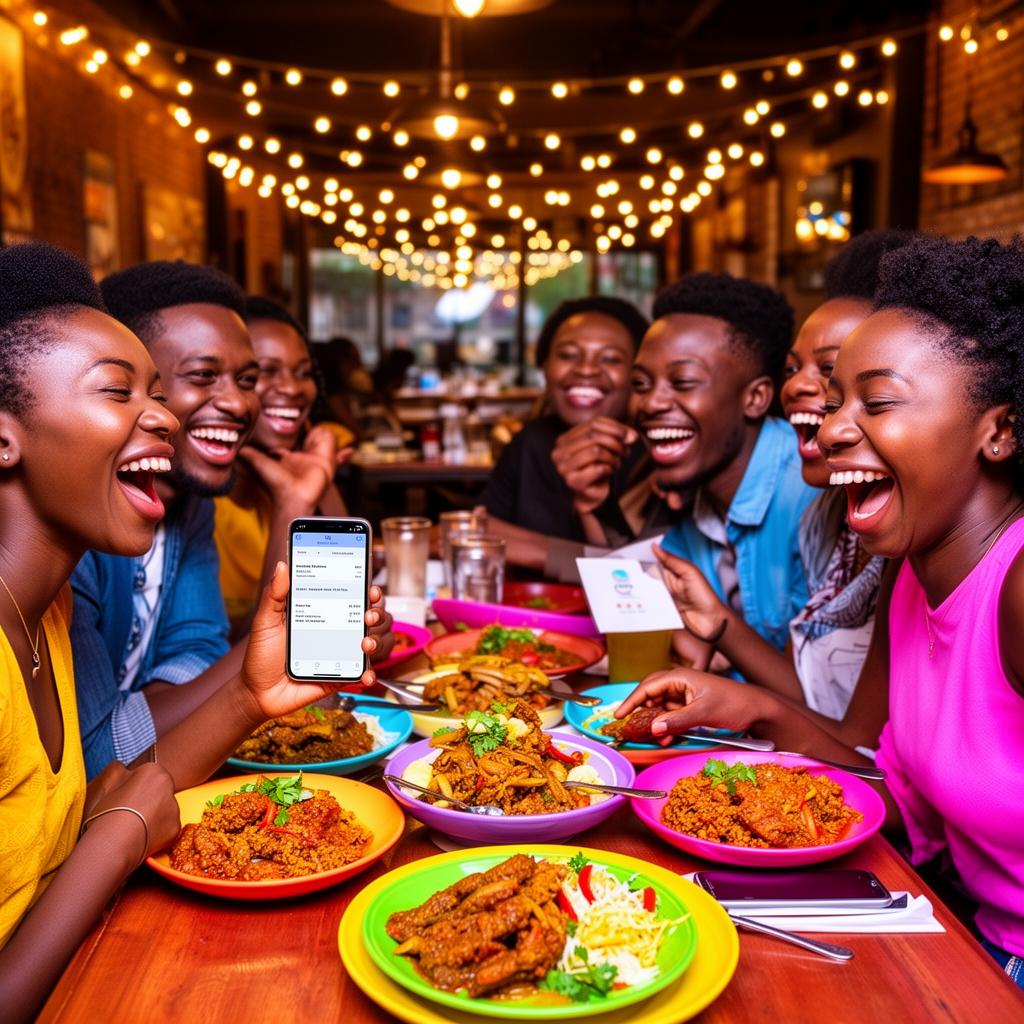
A group around a table of food, settling the bill on a phone
The bill
The Lagos Grill · Table 12₦24,600

Pay in full

Card or bank transfer

Or split it 4 ways at ₦6,150 each. The guests choose, and it still settles as one figure by T+1.

During service

The screens your team sees between seven and eleven

Not a description this time. The ticket, the bill and the alert, as they appear on the floor.

Plates of jollof rice on a table with a QR code standing between them

The order prints where it's made

However it came in, whether the table, a chat or your storefront, food goes to the kitchen and drinks go to the bar. Nobody writes it out twice.

Kitchen ticket

The Lagos Grill · Table 12

  • 2× Suya PlatterKitchen
  • 2× Jollof & ChickenKitchen
  • 4× ChapmanBar
A group around a table of food, settling the bill on a phone

The table pays without waiting for you

They settle the bill from their own phones, in full or split across the group if they'd rather. Either way it reaches your bank as one figure.

The bill
The Lagos Grill · Table 12₦24,600

Pay in full

Card or bank transfer

Or split it 4 ways at ₦6,150 each. The guests choose, and it still settles as one figure by T+1.

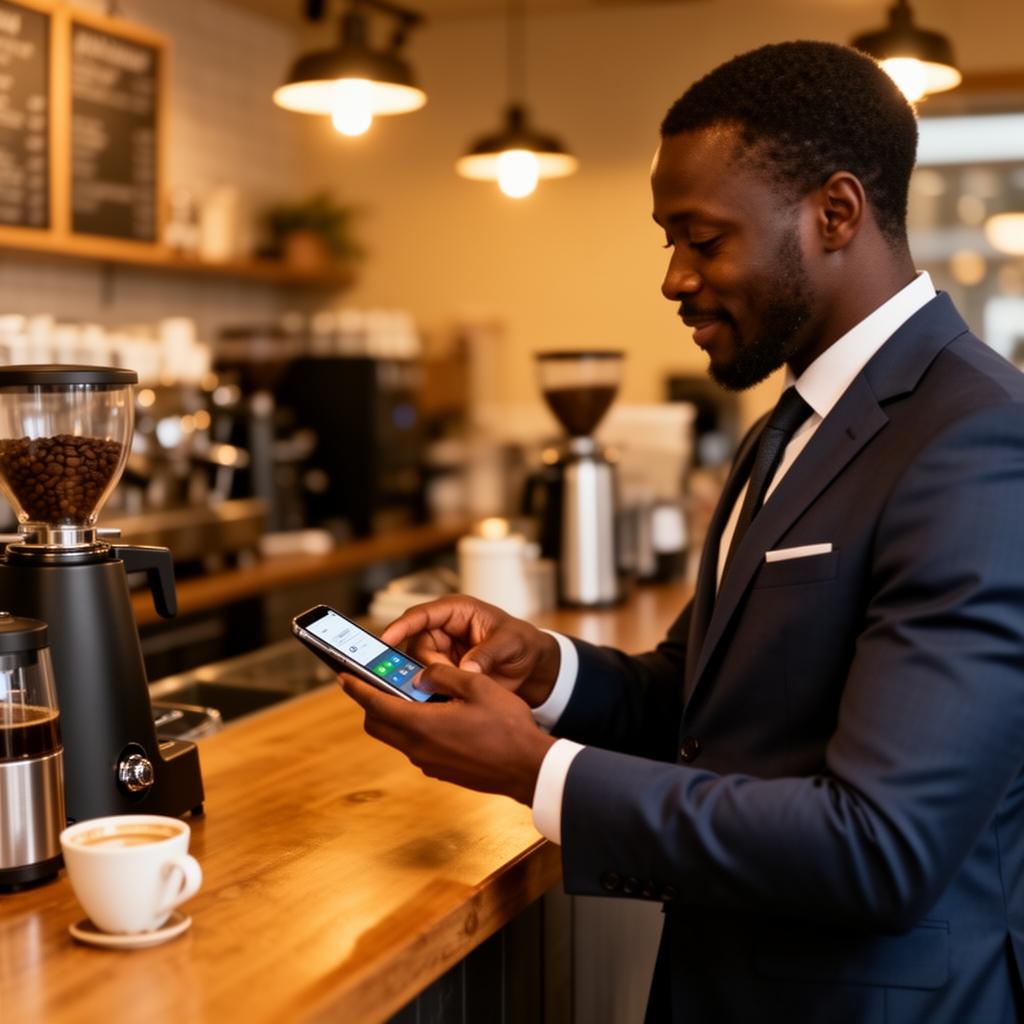
A customer at a counter paying from their phone

You hear about the last bottle first

Stock sits under the menu, so the bar running low reaches you before a guest orders it, and the item takes itself off at zero.

Low stock

Chapman

Bar · Coming off the menu at zero.

Left on hand3

Running out

The bar is countable. The kitchen is not.

Bottles, cans and anything that arrives packaged carry a real count. Pour the last glass and the item takes itself off at zero on the table codes, in the chat and on your storefront at the same moment, so a guest is never the one who finds out.

A plate of jollof is not a stock unit and we are not going to pretend otherwise. Food gets marked off when the kitchen calls it, and it leaves the menu everywhere that same second. Tab tracks what you sell, not the grams that went into it. If you need recipe costing, say so early.

A woman in an apron in a café, holding a tablet showing the menu
Low stock

Chapman

Bar · Coming off the menu at zero.

Left on hand3

A shift, start to close

What a service on Tab actually looks like

  1. Before service

    Open the menu in any browser and mark off what is not on tonight. Table codes are fixed to the tables; they never need resetting.

  2. First orders

    Guests scan and order from the table. Staff place orders from their own phones for anyone who would rather speak to a person.

  3. Through the rush

    Tickets land at the station that makes them, tagged with the table. Nothing is transcribed and nothing is shouted twice.

  4. Tables close themselves

    Guests pay from the phone when they are ready. The code releases for the next party as soon as the payment clears.

  5. After close

    Takings and what ran out are already recorded. The report reaches you the next morning instead of being assembled on a Monday.

Under the pass

One menu, one queue, one set of takings

Ordering, the kitchen queue, payment and the morning report. Bar stock sits underneath as well; food does not, and the page says so rather than selling you a count that would not be true.

  • Sell everywhere

    WhatsApp ordering · Your own storefront on your own link · QR codes for tables, counters and shelves · Bookings, covers and ticketed events

  • Orders & fulfilment

    Live order queue across every channel · Station and counter printing · Fulfilment states from order to handover · Team roles and permissions

  • Get paid

    Collect in Tab by card (NGN or USD), or bank transfer · Or collect on your own POS machine and record the payment in Tab · T+1 settlement to your bank · Every payment attached to the order it paid for, with nothing matched by hand · An end-of-day close you read rather than assemble

  • See what's working

    Daily AI report to your phone · Sales and margin by day, hour and item · What to reorder and what is not moving · A customer database you own

TAB transformed how we handle payments. Our customers love scanning and paying right from their table — it's been a game-changer for our restaurant.

Adaeze OkonkwoOwner, The Lagos Grill · Lagos, Nigeria

Before you sign up

Where a kitchen will feel the edges

Better to know now than in month three.

  • Food is not counted stock. Bottles and packaged items carry a real count; a dish is marked off when the kitchen calls it. If you need recipe costing to the gram, ingredient-level depletion, supplier purchase orders or waste logging, Tab is the wrong layer.

  • If your dining room depends on a complex reservation book with table-turning rules and deposits, a dedicated reservations platform will go deeper than Tab does.

  • There is no staff tip-pooling or commission engine. Team roles exist; the arithmetic of who gets what does not.

  • If you are a single site taking only cash with no interest in selling outside the room, the platform is more than you need.

Questions operators ask

The things restaurants check first

Do guests have to download an app to order?
No. A QR code opens in the phone's browser and WhatsApp is already installed. There is nothing for a guest to sign up for.
Can we still take orders on paper when it gets busy?
Yes. Staff can place orders in Tab from any phone or tablet, so the floor keeps working the way it always has while guests who prefer to order themselves do that.
What happens to the QR code after a table pays?
It releases itself the moment payment completes and is ready for the next guests. The code is fixed to the table; the order is not.
We already have a card machine. Is it wasted?
No. Collect on the terminal you have and record the payment in Tab, so the order and the money still line up. Collecting in Tab is there if you would rather not run a machine at all.
Can the kitchen and the bar see different things?
Yes. An order splits by station, so the kitchen sees food with its modifiers and the bar sees drinks. Each ticket carries the table it came from.
Can we sell outside the dining room?
Yes, on the same menu. Your storefront link and your generated WhatsApp ordering link both take orders for collection or delivery against the same stock.
See how restaurants run Tab

Tell us about the business and we'll come back with a quote, or start setting up straight away.

Tab in other kinds of business